Physics and Fouettés: The Science Behind the Black Swan
By Alana Tang
At their core, science and art feed into one another as the cornerstones of life. Processing colors, creating patterns and even moving with grace require mastery in both fields.
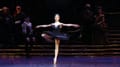
Physics and dance intertwine onstage in the sequence of 32 fouettés performed by the Black Swan in the ballet Swan Lake, where one of the most complicated sciences supports ballet’s arguably most famous turn sequence.
A fouetté, related to the word “whipped” in French, refers to a type of turn in which a dancer maintains their momentum due to the whipping motion of their free (non-supporting) leg. In order for the Black Swan to achieve 32 of these turns, she must first build sufficient energy to begin rotational motion.
This is done in her turn preparation, as she goes from first position (feet turned out and pointing to opposite sides), then to a tendu (one leg slides out to the side while the other remains in first), then rond de jambs (slides one leg along the floor, around and behind the dancer) into a fourth position (feet turned out with one foot behind the other) and pliés (bends her legs).
The primary focus of the preparation is her plié, which stores spring potential energy for her turn. Her legs function similarly to a spring in this context, non-ideal due to the mass of her legs. Even so, bending her legs roughly represents compression of a non-ideal spring, and bending creates distance from the equilibrium of straight legs, allowing for the accumulation of spring potential energy.
As the Black Swan springs up onto relevé (the tips of her toes) and spins to the side, this stored energy allows her to continue turning for longer, and her supporting foot exerts a torque against the floor as she rises up and to the side.
Dance instructor Kendall Auti, owner of the dance channel BodyKinect by Kendall,
Kendall Auti notes that during a fouetté, dancers should “neutralize the pelvis” as they prepare for and complete their turn.
This refers to maintaining a straight line through the head, spine and pelvis instead of tilting the pelvis to the back or front. A neutral pelvis results in a more even center of mass that is perpendicular to the floor, enabling better balance and more stable turns for the dancer.
While turning, the Black Swan must engage her non-supporting leg for the iconic whipping motion of the fouettés.
“Make sure that your fouetté goes front, side, passé,” Auti says.
This refers to the dancer’s non-supporting leg extending straight out as she turns to face the front, moving her leg to her side and then pulling it back towards her body in a passé (bent with her foot near the knee of her supporting leg).
The complex motion of the Black Swan’s leg whipping in and out leans heavily on the principle of conservation of angular momentum. When the Black Swan extends her leg, she distributes weight farther from her center of mass, which is at her core. This increases her moment of inertia and causes her to slow down when she faces the audience (as her leg should be extended when she turns to the front).
Moving her leg to the side and then folding it back to a passé position closer to her center of mass reduces her moment of inertia and allows her to speed back up as she rotates away from the front of the stage. The manipulation of her moment of inertia allows the Black Swan to add rhythm and intentionality to her fouettés, making the tense scene more dramatic and satisfying for the viewers.
Physics is embedded not only in the role of the Black Swan but dance as a whole, a shining example of the intersection of art and science. As both fields continue to expand and bleed into one another, the question to answer becomes not if they blend but how they do so.